
How to Solve Scrap Jamming Problems in Stamping Dies?
Scrap Jamming in Stamping Dies,In the metal stamping industry, scrap jamming is one of the most common problems affecting production efficiency and stamping die performance. When scrap materials cannot be discharged smoothly, they may accumulate inside the die, causing machine downtime, product defects, die damage, and increased maintenance costs.
For automotive stamping dies and precision stamping tools, an effective scrap removal system is essential to ensure stable production, improve die lifetime, and maintain high-quality stamping parts. This article explains the main causes of scrap jamming and practical solutions from die design, manufacturing, and production perspectives.
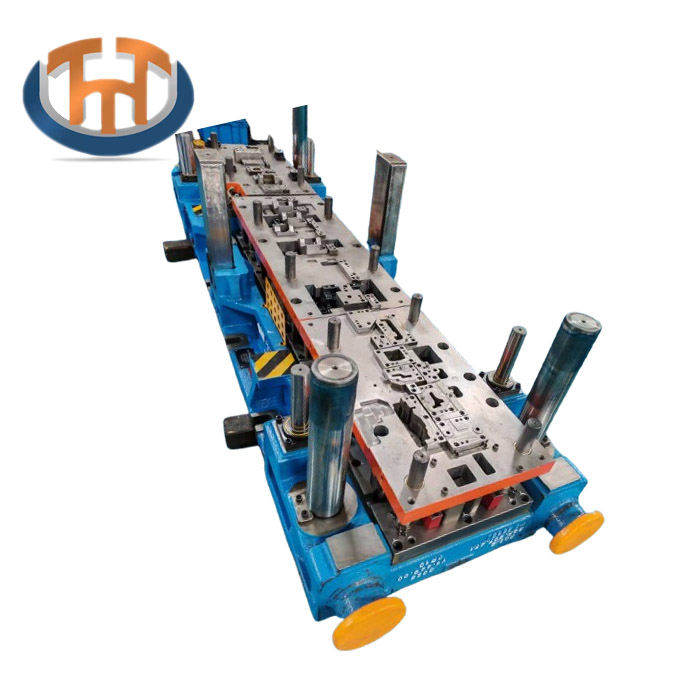
1. Optimize Stamping Die Scrap Discharge Design
The root cause of most scrap jamming issues is improper scrap discharge design. During the stamping process, scrap must be removed quickly and smoothly from the die area. Scrap Jamming in Stamping Dies,If the scrap outlet is too small or the discharge path is blocked, scrap will accumulate and affect continuous production.
Increase Scrap Discharge Space
The scrap opening should provide enough clearance for waste materials to fall freely. For different stamping materials and scrap sizes, engineers should design suitable discharge holes and avoid narrow channels or sharp corners that may trap scrap.
A properly designed scrap discharge system helps prevent material accumulation and improves the reliability of automotive stamping dies during high-volume production.
Design Effective Scrap Chutes
For large stamping dies, especially automotive body panel stamping tools, scrap chutes and guide plates are commonly used to control scrap movement.
A well-designed scrap chute can:
- Prevent scrap from staying inside the die
- Guide waste materials away from the working area
- Reduce production interruptions
- Improve stamping line efficiency
2. Add Automatic Scrap Removal Systems
When gravity discharge is not enough, additional scrap removal systems can be installed to improve production stability.
Air Blow Scrap Removal System
Scrap Jamming in Stamping Dies,Compressed air systems are widely used in high-speed stamping production. Air nozzles can remove small scrap pieces, prevent scrap rebound, and keep the die area clean.
This solution is especially suitable for:
- Precision stamping parts
- Progressive stamping dies
- High-speed stamping production lines
- Small metal components
Scrap Ejector and Lifter Design
Scrap ejectors, spring-loaded pins, and nitrogen gas systems can help push waste materials out of the die cavity. These structures prevent scrap from sticking inside the die and reduce the risk of die failure.
Vacuum Scrap Removal System
For advanced automated stamping lines, vacuum scrap removal technology provides an efficient solution for removing lightweight scrap materials such as aluminum and small metal pieces.
3. Improve Punch and Die Structure Design
The design of punches and dies directly affects scrap removal performance. Improper clearance or excessive penetration depth may cause scrap to become compressed and trapped.
Optimize Punch Clearance
Proper punch and die clearance is critical for stable stamping performance. Incorrect clearance may lead to:
- Abnormal scrap size
- Excessive burr formation
- Scrap blockage
- Reduced die lifetime
For different materials, stamping engineers should select suitable clearance according to material thickness and mechanical properties.
Prevent Scrap Carrying Problems
Sometimes scrap sticks to the punch and is carried upward during die opening. This problem can be solved by using:
- Stripper plates
- Punch ejector pins
- Anti-stick coatings
- Improved die surface treatment
4. Adjust Stamping Process Parameters
Besides die design, stamping process parameters also influence scrap discharge performance.
Control Stamping Speed
When stamping speed is too high, scrap may not have enough time to leave the die area. Adjusting press speed and production cycle timing can improve scrap removal efficiency.
Improve Material Feeding Stability
Material deformation, poor flatness, or incorrect feeding conditions may cause scrap to become irregular and increase the possibility of blockage.
Regular inspection of feeding systems, guiding components, and material positioning devices is important for stable stamping production.
5. Regular Stamping Die Maintenance
Preventive maintenance is an effective way to avoid scrap jamming problems. Regular inspection should include:
- Scrap discharge holes
- Scrap chutes
- Air blow systems
- Punch wear conditions
- Die clearance accuracy
A professional stamping die manufacturer should establish a detailed maintenance checklist to ensure every die operates reliably throughout its service life.
Case Study: Improving Scrap Removal Performance for Automotive Stamping Dies
A customer experienced frequent downtime caused by scrap blockage during automotive panel stamping production. After analyzing the stamping tool structure, engineers found that the scrap outlet was too small and the discharge angle was insufficient.
The improvement solution included:
- Increasing scrap discharge opening size
- Adding optimized scrap chutes
- Installing additional air blow systems
- Adjusting stamping clearance
After modification, the stamping die achieved longer continuous production time, fewer machine stops, and improved overall manufacturing efficiency.
Conclusion
Scrap jamming is not only a production problem but also a die design challenge. A high-quality stamping die requires a complete scrap removal solution from the beginning of design and manufacturing.
By optimizing scrap discharge structures, improving punch and die design, adding automatic removal systems, and performing regular maintenance, manufacturers can significantly improve stamping stability, reduce downtime, and extend stamping tool lifetime.
Choosing an experienced automotive stamping die manufacturer with strong engineering capability is essential for achieving reliable, efficient, and cost-effective stamping production.
Post time: Aug-10-2026

.png)
.png)