
In automotive manufacturing, production problems often begin long before the first component enters a production line. A design that looks acceptable in a CAD model may create difficulties during metal forming, component positioning, welding, dimensional inspection, or automated assembly.
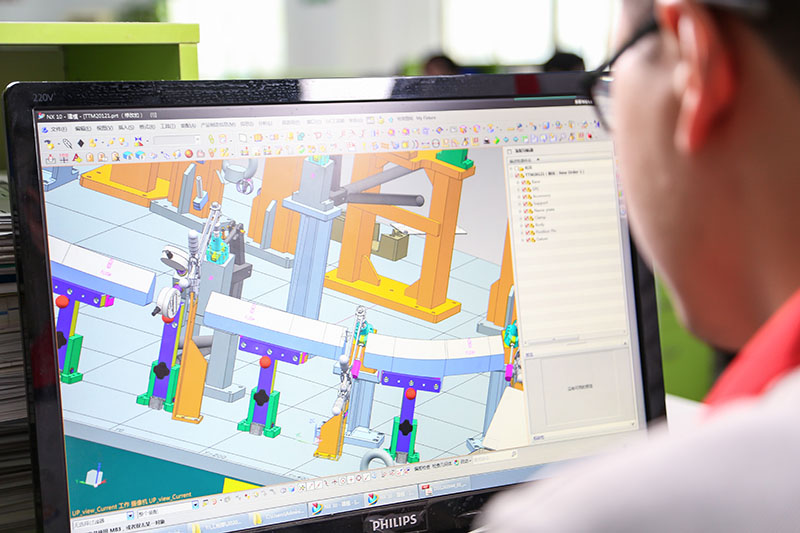
This is why an effective Design for Manufacturing (DFM) review is an important part of automotive project development. By evaluating product geometry, material behavior, tooling requirements, assembly sequences, and inspection methods at an early stage, manufacturers can identify potential problems before they become expensive changes on the shop floor.
For automotive OEMs and Tier 1 suppliers, early engineering coordination can improve project predictability, reduce avoidable rework, and establish a more reliable path from product design to mass production.
1. Why Early DFM Review Matters in Automotive Projects
Automotive components rarely operate independently. A stamped reinforcement may need to fit accurately with several adjacent panels. A welded assembly may depend on consistent locating points. An inspection fixture must reproduce the relevant datum scheme to verify whether the component meets its dimensional requirements.
If these requirements are considered separately, engineering decisions made during one stage may create difficulties in another.
For example, a flange designed without sufficient consideration of forming access may require a tooling revision. A locating feature that is difficult to access during assembly may complicate fixture design. A dimensional requirement that cannot be measured reliably may delay quality approval.
An early DFM review brings these considerations together before detailed tooling construction begins.
The objective is not simply to make a part easier to manufacture. It is to align product design, manufacturing processes, tooling, inspection, and assembly requirements within one practical engineering plan.
2. Evaluate Product Geometry and Manufacturing Feasibility
The first step is to examine whether the proposed component geometry is suitable for the intended production process.
For sheet metal components, engineers should review material thickness, bend radii, flange geometry, hole positions, forming depth, trimming access, and potential deformation areas. High-strength steel and lightweight materials may require additional attention because their forming behavior can differ significantly from that of conventional materials.
For assemblies, the review should also consider joint accessibility, locating surfaces, dimensional interfaces, and the sequence in which individual components will be positioned and joined.
Useful questions include:
- Can the required geometry be produced consistently with the proposed forming process?
- Are there areas where material thinning, cracking, wrinkling, or springback may become a concern?
- Can critical features be accessed during machining, trimming, welding, and inspection?
- Are the datum references and dimensional tolerances clearly defined?
- Could a small design modification simplify manufacturing without compromising product function?
When potential problems are identified early, engineers can evaluate alternative solutions before the design becomes difficult or expensive to change.
For projects involving complex sheet metal components, a suitable automotive stamping die solution can help connect part geometry with practical tooling and production requirements.
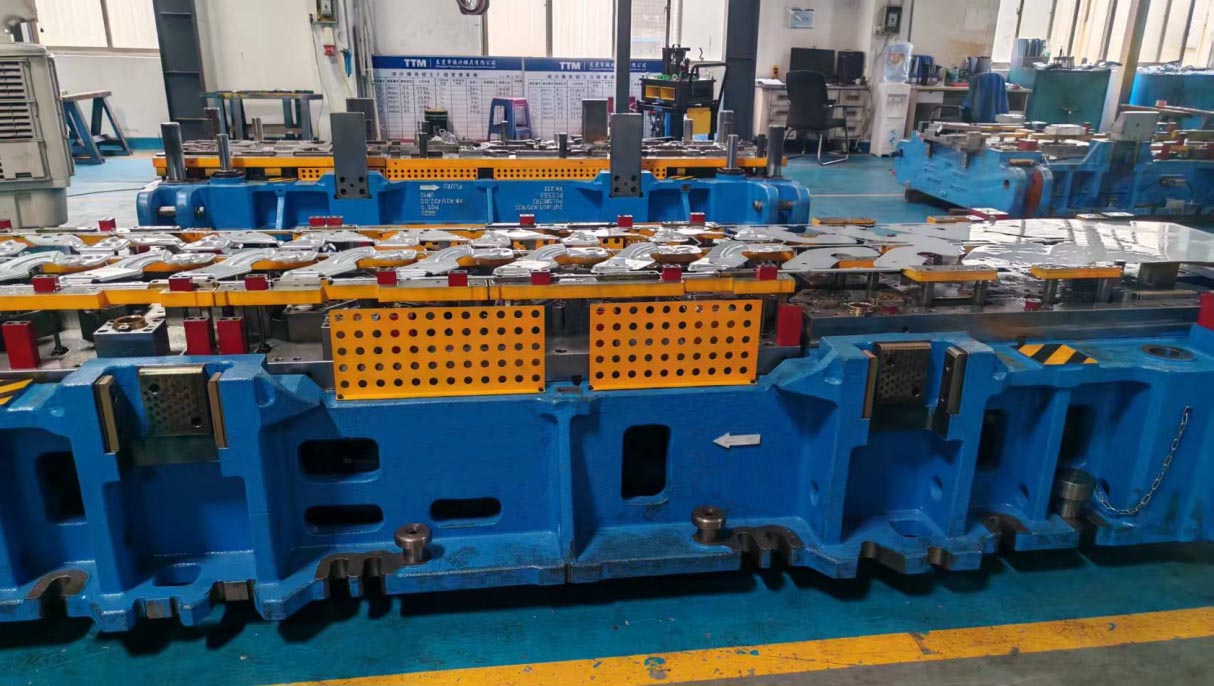
3. Coordinate Tooling Design with the Complete Production Process
A tooling concept should be evaluated in the context of the entire manufacturing sequence rather than as an isolated piece of equipment.
For example, the selection of a stamping process influences how a component is formed, trimmed, and transferred between operations. These decisions can affect the dimensional condition of the part presented to subsequent assembly and inspection processes.
During DFM review, the engineering team should examine the relationship between the proposed process, tooling structure, production volume, press capability, material utilization, and expected maintenance requirements.
The team should also establish how design changes will be communicated to the relevant engineering and manufacturing functions.
A structured review may include:
- Confirmation of the proposed manufacturing route.
- Evaluation of tooling access and component handling.
- Identification of critical dimensions and functional interfaces.
- Review of process assumptions and unresolved technical questions.
- Documentation of design changes requiring customer approval.
- Alignment of tooling milestones with inspection and assembly planning.
This approach helps prevent a common project risk: solving a manufacturing issue at one stage while unintentionally creating another problem downstream.
4. Plan Dimensional Inspection Before Production Starts
Dimensional inspection should not be treated as a final activity added after tooling has been completed. Inspection requirements need to be considered while product geometry, datums, tolerances, and manufacturing processes are still being developed.
A practical inspection plan identifies which characteristics are critical to function, how they will be measured, and what reference system will be used.
Engineers should review datum accessibility, measurement repeatability, fixture locating strategy, probe or sensor access, and the relationship between individual component dimensions and assembly requirements.
For components with complex surfaces or demanding dimensional specifications, a dedicated automotive inspection fixture may be required to support repeatable measurement and verification.
Where appropriate, coordinate measuring machines (CMMs), electronic measurement systems, and other inspection technologies can complement fixture-based checks. The correct method depends on the component geometry, tolerance requirements, inspection frequency, and production environment.
Planning inspection early makes it easier to identify measurement limitations before they affect project approval or production ramp-up.
5. Review Welding and Assembly Constraints
For welded automotive structures, component accuracy alone does not guarantee a consistent finished assembly. Locating strategy, clamping sequence, joint accessibility, weld order, and thermal distortion can all influence the final result.
A DFM review should therefore examine how individual components will be positioned and restrained before welding, whether the required joints are accessible, and whether the proposed assembly sequence is practical.
The review should also consider how locating points relate to the product datum scheme and how dimensional variation may accumulate across multiple components.
A properly planned automotive welding fixture solution can support consistent positioning during assembly. For automated applications, fixture design must also account for robot access, tooling clearance, safety requirements, and the intended operating sequence.
Early coordination between product engineering, welding engineering, fixture design, and quality teams helps reduce the likelihood of discovering assembly conflicts during commissioning.
6. Identify Risks and Assign Clear Engineering Actions
Finding a potential problem is only the beginning. A useful DFM review must turn observations into specific actions with clear ownership and verification criteria.
A simple risk register can help project teams organize technical issues and track their resolution.
Typical fields include:
- Risk description: What may go wrong during manufacturing or assembly?
- Potential impact: Could the issue affect quality, cycle time, tooling cost, or delivery?
- Proposed action: Is a design change, simulation, measurement study, or process trial required?
- Responsible function: Which engineering or manufacturing team will address the issue?
- Verification method: How will the proposed solution be confirmed?
- Status: Has the action been completed and approved?
For example, a potential springback issue may require forming simulation followed by dimensional verification during tryout. An inaccessible inspection point may require a revised datum strategy or an alternative measurement method.
The goal is to resolve high-impact questions before they create schedule pressure during tooling manufacture, production trials, or customer approval.
7. Use Engineering Reviews to Support Project Handover
As a project moves from design to tooling manufacture and then to production, technical information must remain consistent.
Changes to product geometry, material specifications, tolerance requirements, or assembly conditions should be reflected in the relevant drawings, tooling data, inspection plans, and manufacturing instructions.
A formal engineering handover should confirm that open technical issues have been reviewed, approved changes are documented, and the teams responsible for tooling, assembly, and inspection are working from the correct information.
This is especially important for projects involving multiple tooling systems or manufacturing locations. Clear documentation reduces the risk of teams using different assumptions or outdated revisions.
A coordinated engineering process also provides a stronger basis for evaluating changes requested during tryout and production ramp-up.
8. How an Integrated Manufacturing Partner Adds Value
Automotive projects often involve several interconnected disciplines, including stamping dies, inspection fixtures, welding fixtures, CNC machining, and automated production equipment.
When these disciplines are considered together, engineering teams can identify interfaces and dependencies earlier. This does not eliminate every manufacturing challenge, but it provides a more systematic way to evaluate risks and make informed decisions.
TTM Group supports automotive manufacturing projects across tooling, dimensional inspection, welding fixtures, machining, and automation. Its integrated capabilities can help customers coordinate related manufacturing requirements from engineering development through tooling realization and production preparation.
Depending on project scope, early technical discussions may cover product drawings, material specifications, critical dimensions, annual production volume, press capacity, assembly requirements, inspection criteria, and automation expectations.
The appropriate solution should always be determined by the actual part design, customer requirements, and manufacturing conditions.
Learn more about TTM Group’s manufacturing capabilities and its automotive stamping die manufacturing solutions.
9. A Practical Checklist for Your Next Automotive Project
Before authorizing detailed tooling manufacture, project teams can use the following checklist:
- Confirm that the latest product drawings and material specifications are available.
- Review critical dimensions, datum references, and tolerance requirements.
- Evaluate forming feasibility and potential material deformation.
- Confirm the proposed manufacturing route and tooling concept.
- Review component positioning, welding access, and assembly sequence.
- Define how critical product characteristics will be inspected.
- Record unresolved risks, responsible owners, and verification methods.
- Establish a controlled process for engineering changes and approvals.
- Align tooling, inspection, and assembly milestones with the project schedule.
The checklist should be adapted to each project rather than applied as a substitute for detailed engineering analysis.
Conclusion
A successful automotive manufacturing project depends on more than the performance of an individual die, fixture, or machine. It requires a clear understanding of how product design, process planning, tooling, inspection, and assembly interact.
An early DFM review helps engineering teams identify potential production risks while changes are still manageable. By documenting technical decisions, coordinating manufacturing disciplines, and defining verification methods before tooling begins, manufacturers can establish a stronger foundation for consistent quality and a more predictable project launch.
If you are developing a new automotive component or planning a tooling program, TTM Group can discuss your manufacturing requirements and help identify the engineering considerations relevant to your project.
Contact TTM Group
Website: https://www.group-ttm.com/
Email: ttm@ttmgauge.com
Post time: Oct-13-2026

.png)
.png)