


5-Operation Automotive Transfer Die for Precision Sheet Metal Forming
Product Overview
Automotive transfer dies play an important role in the production of complex sheet metal components that require multiple forming and cutting operations. Designed to coordinate several manufacturing stages within one tooling system, a transfer die helps maintain consistent part positioning, dimensional accuracy, and production stability.
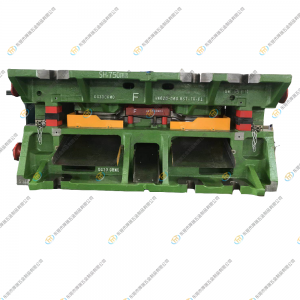
TTM GROUP manufactures custom automotive stamping dies and transfer tooling for automotive manufacturers and Tier 1 suppliers. This five-operation transfer die is designed for a formed automotive cover component featuring multiple ribs, recessed channels, contoured edges, and mounting features.
With a coordinated five-operation process and a tooling structure designed for a high-capacity stamping press, this solution demonstrates TTM GROUP’s capabilities in complex automotive die engineering, precision tooling manufacturing, and production process development.
Explore our automotive stamping die manufacturing solutions to learn more about our tooling capabilities.
Key Features of the Five-Operation Transfer Die
1. Five-Operation Transfer Process
The tooling is designed around five sequential operations, with each operation performing a defined function within the overall manufacturing process. Depending on the approved process layout, these operations may include forming, trimming, piercing, restriking, or other part-specific processes.
Coordinating the operations helps establish a repeatable manufacturing sequence while reducing the need for unnecessary manual handling between individual stages.
The effectiveness of the transfer process depends on accurate tooling alignment, stable part positioning, and proper coordination between the die stations and the press system.
2. Tooling for Complex Formed Geometries
The associated stamped components feature elongated profiles, raised ribs, recessed channels, shaped edges, and localized mounting features. These geometries require careful engineering to control material flow and achieve the required final shape.
During die development, engineers need to consider forming depth, local deformation, springback, trimming allowances, and potential thinning. Appropriate tooling design and process validation help address common forming challenges, including wrinkling, cracking, and dimensional deviations.
3. Designed for High-Capacity Press Production
According to the supplied tooling identification plate, the die is specified for a Fagor 2000-ton press environment.
The tooling parameters include a 1,200 mm shut height, a 720 mm feed height, a 1,153 mm coil width, and a 1,050 mm pitch. These parameters help define the tooling and press interface and must be verified against the approved equipment configuration before production.
A properly matched die and press system supports stable operation, reliable material feeding, and consistent execution of the intended stamping process.
4. Robust Tooling Structure
The die assembly incorporates upper and lower tooling structures designed to support the required forming operations. The supplied identification plate lists an upper die weight of 2,603 kg and a total die weight of 4,993 kg.
For tooling of this scale, structural rigidity, alignment accuracy, machining quality, and reliable guiding arrangements are important considerations. These factors contribute to the repeatability of the tooling system and its suitability for the intended production environment.
5. Dimensional Consistency and Process Validation
Consistent part quality depends on more than the accuracy of the die itself. Material variation, press conditions, transfer positioning, tool wear, and process settings can all affect the final component.
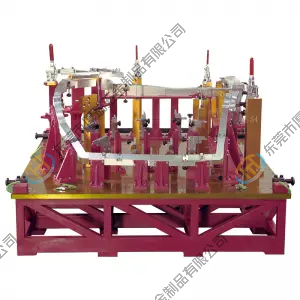
A structured validation process can include trial stamping, dimensional inspection, forming-quality assessment, and adjustments to critical tooling features. Where required, dedicated automotive inspection fixtures can support the verification of component geometry and functional interfaces.
Technical Specifications
| Parameter | Specification |
|---|---|
| Product Type | Automotive Transfer Stamping Die |
| Number of Operations | 5 |
| Press Tonnage | 2,000 tons |
| Press System | Fagor |
| Upper Die Weight | 2,603 kg |
| Total Die Weight | 4,993 kg |
| Shut Height | 1,200 mm |
| Feed Height | 720 mm |
| Coil Width | 1,153 mm |
| Pitch | 1,050 mm |
| Die Dimensions (L × W × H) | 910 × 1,390 × 1,310 mm |
Specifications are based on the supplied tooling identification plate. Confirm the dimensional notation, tooling configuration, and press compatibility against the approved engineering documentation before use.
Manufacturing and Quality Control
The manufacturing of a five-operation transfer die requires coordinated engineering, machining, assembly, and validation activities.
A typical development process includes the following stages:
1. Engineering review
Review the component drawings, 3D models, material specifications, critical dimensions, and production requirements to identify potential forming challenges.
2. Die design and process planning
Develop the tooling structure and operation sequence. Evaluate forming feasibility, material flow, trimming requirements, and transfer arrangements.
3. Precision machining and tool assembly
Manufacture the die components according to the approved design, then assemble and inspect the tooling system to verify critical interfaces and alignment.
4. Tryout and process optimization
Conduct stamping trials and evaluate the resulting components. Adjust the tooling or process parameters as necessary to address identified dimensional or forming issues.
5. Dimensional verification and production validation
Verify critical dimensions and functional features against the specified requirements before production release.
This systematic approach helps reduce avoidable tooling adjustments and supports the development of a stable manufacturing process.
Integrated Automotive Tooling Solutions from TTM GROUP
TTM GROUP provides integrated manufacturing capabilities across automotive stamping dies, inspection fixtures, welding fixtures, precision machining, and automated production equipment.
By coordinating tooling development with dimensional verification and downstream manufacturing requirements, we help customers address challenges across the automotive component production cycle.
Our related capabilities include:
- Automotive stamping dies and tooling for complex sheet metal forming.
- Automotive welding fixtures and jigs for repeatable component positioning and assembly.
- Automotive inspection fixtures for dimensional verification and quality control.
- Precision machining and manufacturing solutions supporting tooling components and related production requirements.
An integrated approach can help align part design, tooling engineering, inspection planning, and manufacturing execution from the early development stage.
Applications
Five-operation transfer dies can be developed for various automotive sheet metal components, depending on the part geometry and manufacturing requirements. Potential applications include:
- Formed automotive cover panels.
- Structural sheet metal components.
- Reinforcement panels and support structures.
- Components with multiple ribs, recessed features, and mounting holes.
- Other automotive parts requiring coordinated multi-operation stamping.
The final tooling configuration should always be determined by the component drawing, material properties, required production volume, and press specifications.
Why Choose TTM GROUP?
Choosing an automotive stamping die manufacturer requires consideration of engineering capability, machining quality, process development, and tooling validation.
TTM GROUP combines automotive die engineering and manufacturing experience with complementary inspection, welding, machining, and automation capabilities. This integrated expertise helps customers coordinate tooling development with their broader production objectives.
For complex stamping projects, our team can review component drawings, evaluate forming requirements, and discuss suitable tooling concepts based on the customer’s technical specifications.
Request a Quote for Automotive Transfer Dies
Are you looking for a manufacturer of custom automotive transfer dies for complex sheet metal components?
Contact TTM GROUP to discuss your part drawings, press requirements, tooling specifications, and production objectives.
Website: https://www.group-ttm.com/
Email: ttm@ttmgauge.com
Contact TTM GROUP for a tooling inquiry to discuss your next automotive stamping die project.


.png)
.png)