
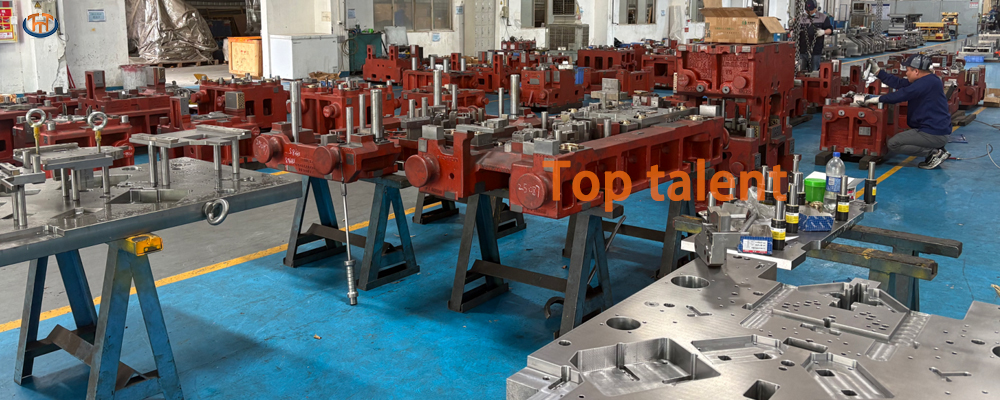
In modern vehicle manufacturing, every component must balance strength, weight, and cost. Among the most critical yet often overlooked elements are the automotive trunk inner parts—the structural framework inside the trunk lid that supports the outer panel, houses latch mechanisms, and ensures crash safety. Producing these complex sheet metal components requires highly specializedc, also known as dies or press tools.
What Are Trunk Inner Parts Stamping Tools?
Stamping tools for trunk inner parts are custom-engineered dies used in high-speed mechanical or hydraulic presses. They transform flat steel or aluminum blanks into intricate, three-dimensional shapes—such as stiffening ribs, hinge attachment points, and wiring harness channels—in one or multiple strokes. A typical trunk inner stamping tool consists of several stations: blanking, drawing, trimming, piercing, flanging, and restriking. Progressive or transfer dies enable mass production with micron-level precision.
Key Design Considerations
Engineers designing these tools focus on several factors:
Material flow control – To prevent tearing or wrinkling during deep drawing, tools incorporate draw beads and optimized die radii.
Springback compensation – High-strength steels (HSS) and advanced high-strength steels (AHSS) tend to rebound after forming. Modern stamping tools integrate computational adjustments and over-forming features.
Surface finish – The inner panel must be defect-free to avoid rattles, corrosion points, or paint imperfections. Tools are often polished and coated with wear-resistant layers (e.g., PVD or chromium).
Materials and Manufacturing
Stamping tools are typically machined from cast iron or tool steel (e.g., D2, A2, or 7Cr7Mo2V2Si). For prototype or low-volume production, cheaper materials like kirksite (zinc alloy) may be used. High-volume tools undergo vacuum heat treatment and cryogenic processing to achieve hardness up to 60–62 HRC. 5-axis CNC machining, wire EDM, and laser scanning ensure the die matches the CAD model of the trunk inner part.
Benefits of Optimized Stamping Tools
Investing in well-engineered trunk inner stamping tools yields:
Lower scrap rates (below 2% in premium dies)
Faster cycle times (6–15 strokes per minute)
Longer tool life (500,000 to over 2 million hits before refurbishing)
Consistent part geometry – Critical for automated assembly with robot-mounted trunk latches and hinges
Future Trends
As automakers prioritize lightweighting and electric vehicles (EVs), trunk inner parts are moving toward mixed-material structures (steel-aluminum hybrid) and hot-stamped ultra-high-strength steel. Consequently, stamping tools now incorporate temperature control systems and servo-driven cushion pins. Digital twins and AI-based wear prediction are also extending tool maintenance intervals.
In summary, the humble stamping tool for automotive trunk inner parts is an engineering marvel. It transforms raw sheet metal into a safety-critical, precisely formed panel—reliably, millions of times over. For any automotive stamping supplier, mastering tool design is not just a capability; it’s a competitive necessity.
Post time: Apr-24-2026

.png)
.png)