
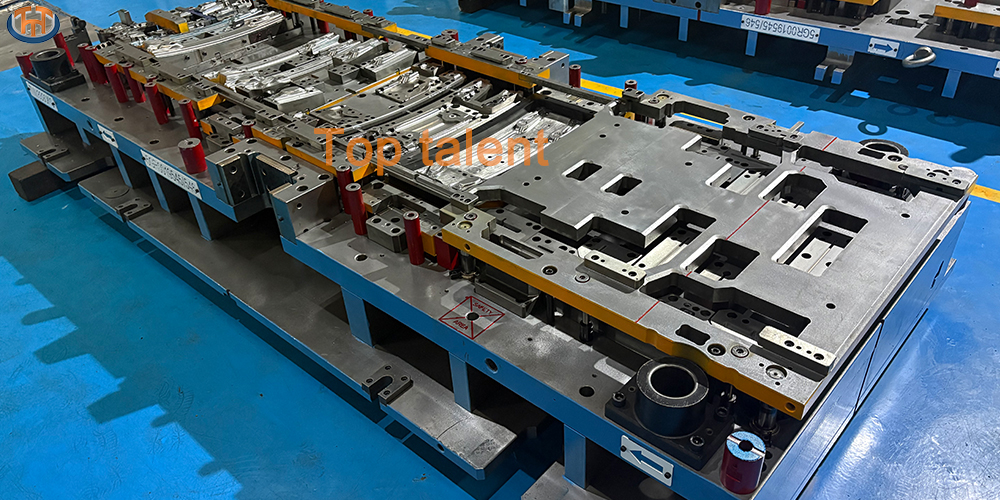
Beneath the sleek, painted surface of your car’s hood lies a hidden marvel of engineering: the hood inner panel. This critical component, formed by a massive and precisely engineered tool called a hood inner stamping die, is far more than just a support structure. It is a vital piece of automotive anatomy, and the die that creates it is a masterpiece of modern manufacturing, directly impacting your vehicle’s safety, performance, and aesthetics.
More Than Meets the Eye: The Role of the Hood Inner
The hood inner panel is the structural backbone of the vehicle’s front end. Its primary functions are multifaceted:
Structural Integrity & Pedestrian Safety: It provides crucial rigidity to the hood assembly, contributing to the overall vehicle stiffness. Modern designs are meticulously engineered with controlled crumple zones to help absorb impact energy in the event of a collision, enhancing pedestrian safety—a key regulatory focus.
NVH Reduction: By adding damping and structure, the inner panel combats noise, vibration, and harshness (NVH), leading to the quiet, refined cabin experience drivers expect.
Support & Attachment: It creates a cavity for insulation, provides mounting points for hood latches, hinges, and struts, and supports the pristine outer panel to achieve that flawless “class-A” surface.
The Stamp of Precision: Engineering the Die
Creating this complex, three-dimensional part is a monumental challenge. The hood inner stamping die is not a single tool but a series of massive, hardened steel molds mounted in a stamping press. The process typically involves multiple stations (a “die line”) for drawing, trimming, piercing, and flanging the raw sheet metal—usually high-strength steel or aluminum.
The design and machining of this die are where engineering excellence is paramount. Simulation software is used extensively to predict metal flow, prevent splits, wrinkles, and springback (the metal’s tendency to return to its original shape). Every radius, draw bead, and vent must be perfect. The deepest draws and most severe forms are found here, requiring exceptional skill from die engineers and toolmakers. Even microscopic imperfections in the die surface will transfer to the part, potentially causing visible defects on the outer hood.
Material Evolution & Manufacturing Demands
As automakers push for lighter vehicles for better fuel efficiency and handling, materials are shifting. The prevalence of advanced high-strength steels (AHSS) and aluminum alloys presents new challenges for stamping dies. These materials are stronger but less malleable, requiring even more precise die designs, higher press forces, and increasingly durable die coatings to resist wear and galling.
Furthermore, the trend towards model diversification means stamping lines must be more flexible. Some dies are now designed with quick-change features or even as multi-model dies, capable of producing inners for different vehicles with minimal downtime, a significant cost and efficiency consideration for manufacturers.
The Bottom Line
The automotive hood inner stamping die is a foundational element of vehicle manufacturing. It operates behind the scenes, yet its quality dictates the safety, quality, and efficiency of the final product. It represents a significant investment in technology, materials science, and human expertise. The next time you glance at the hood of a car, remember the intricate inner geometry and the monumental, precision-crafted tool that made it possible—a true unsung hero on the road to automotive excellence. As vehicles evolve with electrification and new materials, the innovation in stamping die technology will continue to drive the industry forward.
Post time: Dec-19-2025

.png)
.png)